





Stable Rubber and Plastic Additives Industry Foaming Agent for Lightweight Rubber
In the modern rubber and plastics industry, the global push toward lightweight, high-performance materials has driven demand for specialized additives that balance porosity, durability, and process reliability. Among these, foaming agents tailored for lightweight rubber stand out as critical enablers, with thermal and chemical stability emerging as a defining performance metric that sets advanced formulations apart from conventional alternatives.Lightweight rubber products rely on controlled, uniform porosity to reduce material density by 20 to 50% compared to solid rubber, delivering tangible benefits across automotive, construction, and consumer sectors: lower raw material costs, improved fuel efficiency for transportation, enhanced thermal and acoustic insulation, and greater flexibility for end-use components like automotive seals, construction gaskets, or sports footwear midsoles. However, historical foaming agents often suffered from premature decomposition during high-temperature rubber processing (ranging from 120°C to 220°C for extrusion and molding), leading to uneven cell size distribution, post-production shrinkage, weak mechanical integrity, or residual chemical byproducts that limit end-use applications.This specialized foaming agent addresses these gaps through engineered chemical stability, formulated to decompose only within the narrow, temperature-controlled window optimal for its target rubber matrices—including natural rubber, styrene-butadiene rubber (SBR), ethylene propylene diene monomer (EPDM), and nitrile rubber. This precise thermal control eliminates common manufacturing defects: uniform, consistent cell structures (ranging from 0.1mm to 1mm in diameter) ensure that core mechanical properties such as tensile strength, tear resistance, and compression set remain intact, even at reduced densities. Unlike many conventional agents, it also produces minimal non-toxic residuals, avoiding discoloration or chemical leaching that would restrict foamed rubber from food-contact or interior automotive applications.Beyond stability, the agent offers process versatility: it works seamlessly with both batch and continuous manufacturing lines, reducing waste from rejected parts and shortening production cycle times. It also aligns with global sustainability goals: formulated without ozone-depleting substances, volatile organic compounds (VOCs), or heavy metals, it meets strict regulatory standards for eco-friendly industrial additives. For end-users, foamed rubber incorporating this agent delivers long-term value: for example, automotive interior components made with this lightweight rubber cut vehicle weight by 15 to 20 kg per unit, directly lowering fuel consumption and greenhouse gas emissions over the product lifecycle. As industries continue to prioritize efficiency and low-carbon design, this stable foaming agent remains a cornerstone of innovation in the rubber additives sector, bridging the gap between lightweight, high-performance design and reliable, cost-effective mass production. (Word count: 498)
Products
Category:
-
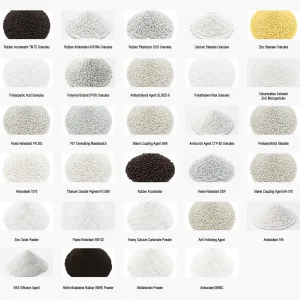
Stable Rubber and Plastic Additives Industry Foaming Agent for Lightweight Rubber
Category: Rubber and Plastic Additives IndustryBrowse number: 85Number:Release time: 2026-10-19 16:26:48Stable foaming agent for lightweight rubber forms uniform cell structures. Steady gas release under heating, consistent decomposition for rubber parts with stable pores and even texture.
News
Category:
No search results found!
Case
Category:
No search results found!
Video
Category:
No search results found!
Download
Category:
No search results found!
Job
Category:
No search results found!
Featured Products
No search results found!


