





secondary packaging line for industrial end‑of‑line operations
Secondary packaging lines form the critical bridge between primary product packaging and final distribution in industrial end-of-line operations, designed to streamline grouping, protection, and labeling of individual primary packs (e.g., bottles, cartons, pouches) into cohesive, transport-ready units. These lines address core industrial needs: optimizing logistics efficiency, safeguarding products from transit damage, enhancing brand visibility, and ensuring regulatory compliance without compromising production speed.A typical secondary packaging line operates in synchronized, sequential stages, starting with an automated infeed system that feeds primary packages from upstream production lines. High-precision optical sensors and adjustable guides align items consistently, preventing jams and misalignment during subsequent processes. For high-volume operations, a grouping station uses robotic arm manipulators or conveyor diverters to arrange primary packs into uniform, customizable layers—such as 4x3 or 6x5 configurations—tailored to case dimensions and palletization requirements, while small-batch lines may incorporate semi-automated groupers for flexibility.Next, an optional layer padding station (for fragile goods) inserts corrugated or foam pads between product layers to absorb shocks and reduce pressure-related damage during stacking or shipping. The line then connects to a case erector module, which unfolds flat corrugated stock from a magazine, folds side walls, and applies adhesive to form open, rigid shipping cases. A precision packing station follows: robotic pick-and-place systems or pneumatic pushers insert pre-grouped product layers into cases, verifying each case meets weight and pack count specifications to avoid underfilled or overloaded units.Sealing stations secure cases with hot-melt glue for heavy loads, pressure-sensitive tape for lightweight applications, or metal staples for extreme durability. Integrated labeling modules then apply two key sets of labels: shipping labels with barcodes, batch numbers, and destination details for supply chain tracking, and optional secondary retail labels (for consumer-facing goods) aligned with brand guidelines. The line interfaces seamlessly with downstream palletizing systems, ensuring finished cases transfer directly to pallets for storage or freight.Key industrial features include quick changeover capabilities—adjusting for new product sizes or case dimensions in under 15 minutes—to support mixed production runs, real-time error detection (missing packs, misaligned cases) that triggers line stops to reduce waste, and intuitive human-machine interfaces (HMIs) requiring minimal specialized operator training. Safety protocols, such as interlocking guards around moving components and emergency stop buttons, ensure compliance with workplace standards. For sectors like food and pharmaceuticals, the line integrates traceability tools logging every pack and case, meeting regulatory mandates for product recalls and quality control. (Word count: 497)
Products
Category:
-
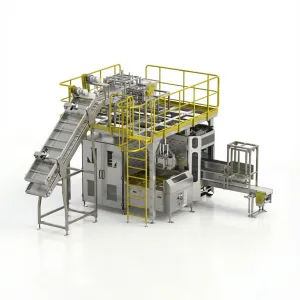
Automatic Secondary Packaging Line for End‑of‑Line Product Handling
Category: Secondary Packaging LineBrowse number: 138Number:Release time: 2026-08-10 17:02:49This automatic secondary packaging line connects production‑logistics systems, automates end‑of‑line carton packing for high‑volume industrial manufacturing.
News
Category:
No search results found!
Case
Category:
No search results found!
Video
Category:
No search results found!
Download
Category:
No search results found!
Job
Category:
No search results found!
Featured Products
No search results found!


