





Secondary packaging line for end-of-line packaging
A secondary packaging line for end-of-line operations is a highly automated, integrated system designed to transform individual primary-packaged goods into unitized, distribution-ready bundles, bridging the gap between manufacturing completion and warehouse logistics. Its core functions go beyond simple grouping: it protects products from transit damage, standardizes packaging to meet supply chain requirements, and embeds traceability data to support inventory management and regulatory compliance.The line operates in a sequential, synchronized workflow tailored to handle diverse product types—from pharmaceutical vials to food sachets or beverage cans—with adjustable parameters for varying pack sizes and quantities. It begins with an infeed system that receives primary units from upstream primary packaging lines, aligning and spacing individual items to eliminate jams and ensure consistent flow through subsequent stages. Next, a collation module groups these items into predefined bundles, such as a 4x6 grid of bottles or a stack of 12 sachets, using precision guides or robotic arms to maintain alignment without damaging delicate products.Subsequently, the line prepares corrugated cardboard cases from flat blanks, erecting each blank into a rigid structure and applying adhesive to base flaps for stability. The collation module then deposits the grouped primary units into the open cases, with mechanical pushers or robotic loaders ensuring accurate, gap-free placement to avoid shifting during later handling. Once loaded, the line seals the case: top flaps are folded and secured with pressure-sensitive tape or hot-melt glue, depending on product weight and transit needs. Integrated quality assurance systems—including computer vision and weight sensors—inspect every sealed case to detect missing items, misaligned seals, or damaged packaging, automatically rejecting faulty units to maintain consistency.Next, coding and marking stations apply standardized barcodes, batch numbers, expiration dates, and regulatory labels (such as allergen warnings for food products) to each case, aligning with global supply chain protocols like GS1 standards. The final stage is palletization: the line stacks sealed cases onto pallets in optimized patterns that maximize load stability and warehouse space efficiency, followed by stretch wrapping to secure layers and prevent shifting. Many lines add corner protectors for high-value or fragile goods.Modern secondary packaging lines deliver significant operational benefits: they reduce manual labor by up to 70% vs. manual packing, cut product damage rates through uniform handling, and support quick changeovers (often under 10 minutes) to switch between product lines. They also integrate with warehouse management systems (WMS) to sync production data with inventory tracking, enabling seamless delivery to retail or distribution centers. Compliance with industry regulations—such as FDA requirements for pharmaceuticals or food safety guidelines—is built into the line’s design, ensuring every batch meets legal standards before leaving the facility, making it a critical component of efficient, reliable end-of-line operations. (Word count: 498)
Products
Category:
-
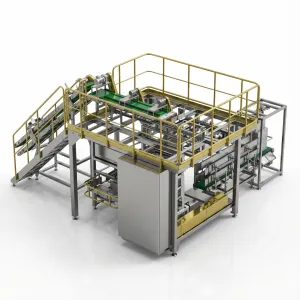
Reliable Secondary Packaging Line for Continuous Production Packaging
Category: Secondary Packaging LineBrowse number: 110Number:Release time: 2026-09-21 16:43:01This reliable secondary packaging line integrates multiple units, automating case packing and conveying for stable continuous mass production.
News
Category:
No search results found!
Case
Category:
No search results found!
Video
Category:
No search results found!
Download
Category:
No search results found!
Job
Category:
No search results found!
Featured Products
No search results found!


