





Quality New Energy Materials Industry Materials for energy storage new energy equipment
The global transition to a low-carbon economy depends on two core pillars: scalable energy storage for variable renewables (solar, wind) and reliable new energy equipment. At the center of both lies the advancement of high-quality new energy materials—components that directly shape the performance, cost, safety, and longevity of every clean energy system. For energy storage applications, quality materials are the backbone of evolving battery technologies. Dominant lithium-ion batteries have seen their capabilities transform via precision-engineered cathode and anode materials: high-nickel NMC cathodes balance energy density, thermal stability, and cost, while silicon-graphite composite anodes double storage capacity compared to traditional graphite. The next frontier, solid-state electrolytes, replaces flammable liquid counterparts to eliminate fire risks, enabling higher operating voltages critical for electric vehicles and grid-scale storage. For long-duration grid backup, flow batteries rely on durable vanadium electrolytes and ion-selective membranes, where material quality ensures consistent charge-discharge efficiency over thousands of cycles, supporting multi-day renewable energy integration. In new energy equipment, specialized materials drive performance gains in power generation and conversion. Photovoltaic (PV) systems use passivated silicon wafers and perovskite absorber layers, with high-precision manufacturing boosting cell efficiency above 26% and reducing production costs. Wind turbines leverage lightweight, high-strength carbon fiber reinforced composites for blades, enabling spans of 100+ meters to capture more wind energy while withstanding extreme coastal or offshore conditions, cutting structural load by 30% compared to metal alternatives. Advanced permanent magnets, designed with reduced rare earth content, power turbine generators and electric motors, mitigating supply chain vulnerabilities and lowering production footprints. Inverters—the energy conversion hub—use wide-bandgap semiconductors (silicon carbide, gallium nitride) that lift energy conversion efficiency by 5–10%, reducing system losses and shrinking equipment size. Quality in these materials is non-negotiable: inconsistent composition leads to premature equipment failure, safety hazards, and higher lifecycle costs. As global demand for clean energy surges, continuous R&D into sustainable, high-performance new energy materials will be key to unlocking an affordable, reliable, and net-zero energy future for all. (Word count: 498)
Products
Category:
-
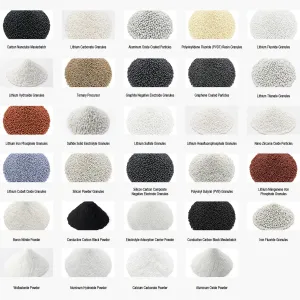
Quality New Energy Materials Industry Materials for New Energy Equipment
Category: New Energy Materials IndustryBrowse number: 61Number:Release time: 2026-10-22 15:45:35We offer quality new energy materials for new energy equipment assembly. Engineered for stable performance, as key components to guarantee reliable operation in varied conditions.
News
Category:
No search results found!
Case
Category:
No search results found!
Video
Category:
No search results found!
Download
Category:
No search results found!
Job
Category:
No search results found!
Featured Products
No search results found!


