





High Purity New Energy Materials Industry Materials for laboratory energy cell R&D
High purity new energy materials are foundational for reliable, reproducible lab-scale energy cell (battery, supercapacitor) R&D. They minimize side reactions, eliminate performance artifacts from trace impurities, and enable accurate characterization of next-gen energy storage systems. Below is a structured breakdown of key lab-grade materials, their specs, and applications:--- 1. Core High Purity Material Categories for Lab Energy CellsAll lab-grade materials typically meet 99.9% (3N) to 99.999% (5N) purity, with strict limits on trace metal impurities (<10–100 ppm, analyzed via ICP-MS) and moisture content (<10 ppm for electrolytes). a. Cathode Active Materials (CAMs)- Layered oxides: Lab-grade NMC (LiNiₓMnᵧCo_zO₂), NCA (LiNiCoAlO₂), LCO (LiCoO₂) → 3N purity, low Na/K impurities to avoid disrupting Li-ion intercalation. Used as reference materials for new cathode testing.- Phosphates: LFP (LiFePO₄), LFMP (LiFeMnPO₄) → 4N purity, <50 ppm Fe impurities to prevent redox shuttling. Ideal for lab studies of phosphate-based cathode optimization.- Conversion cathodes: Ultra-high purity (5N) sulfur for Li-S cells, low impurity metal oxides (Co₃O₄, Fe₂O₃) for conversion-type cathode R&D. b. Anode Active Materials (AAMs)- Graphite: Lab-grade synthetic/ natural graphite (3N purity, <0.05% ash) for Li-ion half-cell testing.- Silicon-based anodes: 5N nanosilicon, SiOₓ, and silicon nanoparticles → ultra-purity to avoid impurities that exacerbate volume expansion and degradation.- Li metal anodes: 5N Li foils, ribbons, or powders → low Na/K impurities to suppress dendrite formation, critical for solid-state and Li-metal battery R&D.- Hard carbon: 3N purity hard carbon for Na-ion/K-ion lab cells, minimizing irreversible capacity loss. c. Electrolyte & Solid Electrolyte Materials- Liquid electrolytes: Ultra-dry solvents (EC, DMC, DEC; <10 ppm water), high-purity salts (LiPF₆, LiTFSI, NaFSI; 3N purity, <50 ppm HF) → tailored for lab-scale coin/pouch cells.- Solid electrolytes: Lab-grade garnets (LLZO, Li₇La₃Zr₂O₁₂; 4N purity), sulfides (Li₂S-P₂S₅; 4N), and polymeric electrolytes (PEO; 3N) → used in solid-state battery R&D. d. Binders & Conductive Additives- Binders: Lab-grade PVDF (99.9% purity, no residual monomers), CMC, SBR → ultra-pure to avoid interfering with electrode reaction kinetics.- Conductive additives: High-purity Super P carbon, CNTs, graphene (low metal catalyst impurities <0.1 wt%) → enable uniform electrode conductivity without side reactions.--- 2. Lab-Specific RequirementsFor R&D work, materials must also meet:- Consistent particle size distribution (for uniform electrode coating)- Low residual solvents/unreacted precursors- Compatibility with small-scale fabrication (coin cells, lab-scale pouch cells)--- 3. Top Suppliers for Lab-Grade High Purity MaterialsSpecialized suppliers for lab R&D include:- MSE Supplies, Nanostructured & Amorphous Materials Inc. (US)- Sigma-Aldrich, Merck KGaA (global)- Nanoshel, Alfa Aesar (specialized energy materials)---This category of materials is essential for validating new battery chemistries (e.g., solid-state, Li-S, Na-ion) and publishing reproducible performance data in academic and industrial R&D.
Products
Category:
-
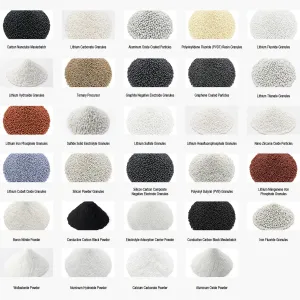
High Purity New Energy Materials Industry Materials for Energy Cell R&D
Category: New Energy Materials IndustryBrowse number: 68Number:Release time: 2026-10-22 15:42:57We supply high-purity new energy materials for energy cell R&D. Made in controlled environments with low impurities for reliable lab tests and formula verification.
News
Category:
No search results found!
Case
Category:
No search results found!
Video
Category:
No search results found!
Download
Category:
No search results found!
Job
Category:
No search results found!
Featured Products
No search results found!


