





heat stable rubber and plastic additives industry foaming agent for lightweight rubber
The global push for lightweight, high-performance materials across automotive, construction, aerospace, and consumer goods sectors—driven by regulatory mandates for lower carbon emissions and end-user demand for cost-efficient, durable products—has fueled significant innovation in rubber and plastic additive technology, most notably heat stable foaming agents tailored for lightweight rubber production. Foaming agents are critical additives that create tiny, uniform gas bubbles within rubber matrices during processing, reducing overall material density while preserving essential functional properties. However, traditional foaming agents often suffer from premature decomposition at high vulcanization or extrusion temperatures common in rubber manufacturing, leading to uneven cell structures, weakened mechanical performance, and inconsistent final products.Heat stable foaming additives address these limitations through chemically modified molecular structures that maintain integrity up to precise, elevated processing temperatures, typically matching the vulcanization cycles used to cure rubber compounds. This controlled decomposition releases inert gases such as nitrogen or carbon dioxide at a consistent rate, forming closed or semi-open foam cells with uniform size and distribution. The result is lightweight rubber materials that are 15–40% lighter than solid rubber, depending on formulation, without sacrificing key attributes like tensile strength, elasticity, thermal resistance, or chemical durability.Beyond weight reduction, these heat stable foaming agents offer additional operational and environmental benefits. Unlike conventional alternatives, which often decompose unpredictably during processing and produce harmful byproducts, these modified additives generate minimal volatile organic compounds (VOCs) and release gases at a controlled rate, improving workplace safety and reducing production waste from defective goods. For end-users, the lightweight nature of foamed rubber translates to tangible energy savings: automotive applications like low-rolling-resistance tires cut fuel consumption, while construction foam gaskets and insulation panels lower heating and cooling costs. In aerospace, lightweight rubber seals and vibration dampers boost fuel efficiency and payload capacity, and consumer goods such as lightweight shoe soles and sports equipment benefit from the material’s balance of low weight and superior shock absorption.Recent advancements in this additive category have also expanded compatibility with a wider range of rubber compounds, including natural rubber, styrene-butadiene rubber (SBR), and ethylene propylene diene monomer (EPDM), making them versatile for diverse industry needs. As demand for sustainable, performance-driven materials continues to grow, heat stable foaming agents remain a cornerstone of modern rubber manufacturing, enabling the production of materials that align with both operational requirements and global sustainability goals. (Word count: 498)
Products
Category:
-
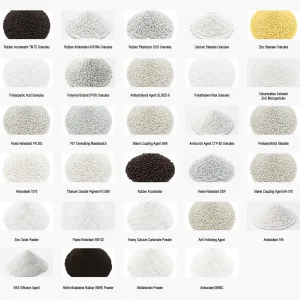
Stable Rubber and Plastic Additives Industry Foaming Agent for Lightweight Rubber
Category: Rubber and Plastic Additives IndustryBrowse number: 85Number:Release time: 2026-10-19 16:26:48Stable foaming agent for lightweight rubber forms uniform cell structures. Steady gas release under heating, consistent decomposition for rubber parts with stable pores and even texture.
News
Category:
No search results found!
Case
Category:
No search results found!
Video
Category:
No search results found!
Download
Category:
No search results found!
Job
Category:
No search results found!
Featured Products
No search results found!


