




News

Safety Auxiliary Equipment for Packaging Production Lines
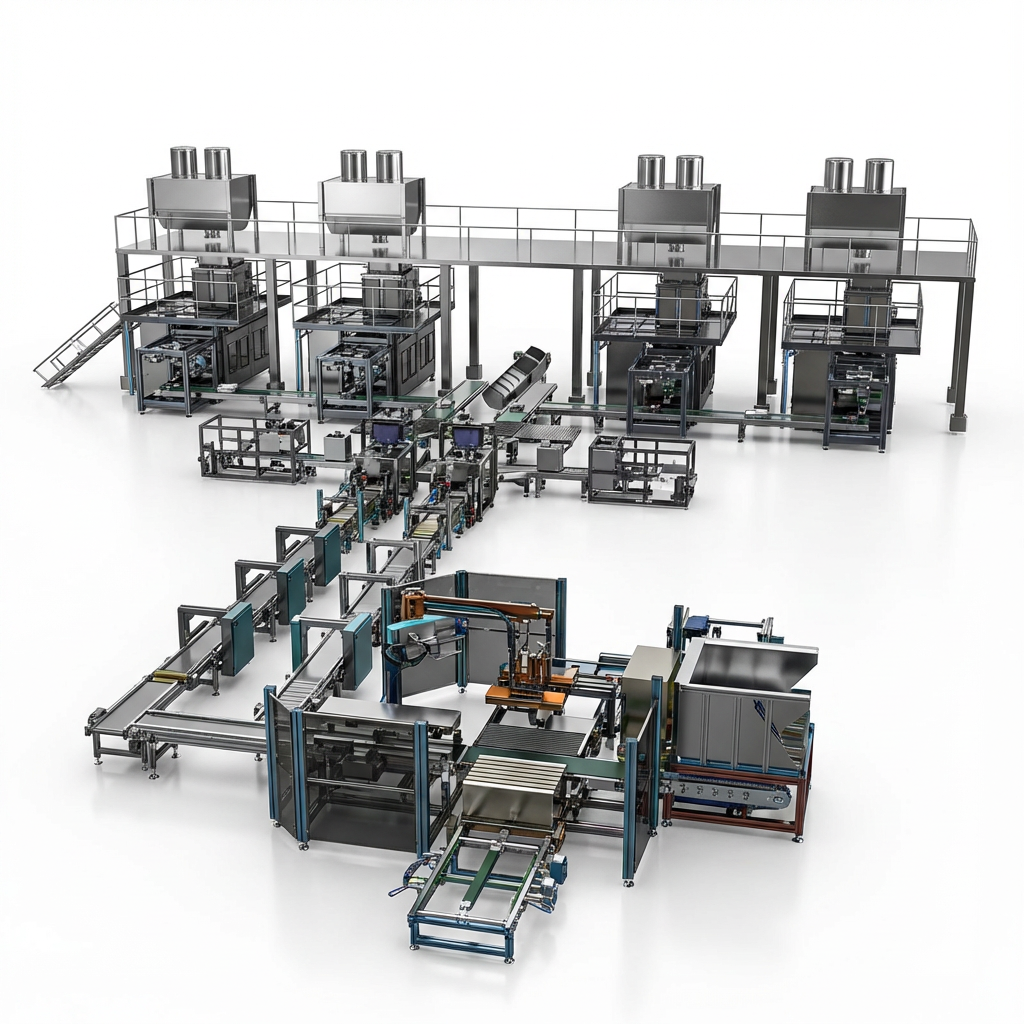
Safety Auxiliary Equipment for Packaging Production Lines
In the fast-paced global packaging industry, automated production lines (case sealers, robotic palletizers, vertical form-fill-seal machines, etc.) drive high-volume output, but also introduce critical occupational risks: crush injuries, entanglement, impact accidents, and exposure to moving parts. Safety Auxiliary Equipment for Packaging Production Lines is a purpose-built, integrated suite of devices that mitigates these hazards, ensures regulatory compliance, protects workers, and enhances line performance—all without disrupting core production workflows. Unlike primary packaging machinery, these devices operate as a protective layer between frontline teams and dangerous line components, making them indispensable for modern facilities aiming to balance efficiency and safety.
---
1. Definition & Core Categories of Safety Auxiliary Equipment for Packaging Production Lines
1.1 Official Definition
Safety Auxiliary Equipment for Packaging Production Lines refers to targeted, process-aligned tools installed across packaging workflows to identify, prevent, or minimize workplace accidents. Tailored to packaging-specific risks (pinch points, rotating rollers, high-pressure sealing jaws), these devices are proactive (stopping hazards before incidents) rather than reactive, supporting facilities to meet global safety standards and reduce downtime tied to injuries.
1.2 Key Device Categories
The ecosystem of safety auxiliary equipment for packaging lines includes 5 core categories, each designed for distinct workflow hazards:
1. Mechanical Guarding Systems: Physical barriers (fixed guardrails, interlocked retractable barriers) blocking access to high-risk zones (e.g., robotic palletizer arms, conveyor junctions). Retractable guards adjust to line operations, enabling temporary access for maintenance while limiting exposure during production.
2. Safety Detection Sensors: Electronic tools (light curtains, pressure mats, photoelectric eyes) that trigger line stops if unauthorized access or malfunctions are detected. Ideal for high-speed lines where fixed guards would slow output, these sensors offer <10ms response times to avoid prolonged halts.
3. Emergency & Alarm Systems: E-Stop stations (strategically placed at operator workstations), audible-visual alarms, and standardized safety signage to alert teams to faults or hazards. E-Stops cut line power in <0.5s, while alarms prevent secondary accidents during line shutdowns.
4. Lockout/Tagout (LOTO) Devices: Kits (padlocks, valve locks, vinyl tags) that prevent accidental startup during maintenance— a leading cause of packaging line injuries. LOTO ensures only authorized teams access live equipment for repairs.
5. Automation Safety Interlocks: Integrated into line PLCs, interlock switches, and safety relays ensure guarding and detection devices work in unison. For example, a robotic palletizer door lock prevents arm movement until the door is fully closed.
---
2. Key Advantages of Integrating Safety Auxiliary Equipment
Deploying these devices delivers measurable business and safety benefits, per 2023 Packaging Safety Association (PSA) data:
1. Reduced Injury Costs: OSHA reports packaging industry injuries cost U.S. facilities ~$41,000 per incident in compensation, fines, and lost productivity. Proper safety equipment cuts these costs by 65%, with case sealers seeing 90% fewer hand-crush injuries after light curtain installation.
2. Regulatory Compliance: Global standards (OSHA 1910 Subpart O, CE EN 1088, ISO 13849) mandate guarding for packaging machinery. Non-compliance can lead to OSHA fines exceeding $15,000 per violation or full facility shutdowns.
3. Minimized Downtime: Contrary to myths, modern safety devices integrate seamlessly with high-speed lines (up to 1,200 packages/min). AI-powered sensors reduce false line stops by 40%, while predictive monitoring detects malfunctions before unplanned outages.
4. Improved Worker Morale: A 2022 Gallup survey found facilities with robust safety systems see 30% higher job satisfaction, lower turnover, and 12% higher productivity, as teams operate without anxiety about hazards.
---
3. Technical Specifications of Common Safety Auxiliary Devices
Below is a standardized table of core safety equipment, aligned with industry specs for packaging lines:
| Device Type | Operating Range (mm) | Response Time (ms) | Material Construction | Compliance Certifications | Typical Packaging Line Applications |
|-------------|----------------------|--------------------|------------------------|---------------------------|--------------------------------------|
| Safety Light Curtains | 100–5000 | <8 | Anodized Aluminum | OSHA, CE, ISO 13849 | Case sealers, robotic palletizers, conveyor systems |
| E-Stop Stations | N/A | <5 | Stainless Steel/ABS | OSHA, CE | Conveyor junctions, operator workstations |
| Safety Pressure Mats | 2000 x 1000 | <12 | Rubber with conductive core | OSHA, ISO 13849 | Robotic workcells, machine loading zones |
| Photoelectric Safety Sensors | 50–2000 | <10 | Polycarbonate Housing | OSHA, CE | Labeling machines, inspection lines |
| LOTO Electrical Kits | N/A | N/A | Metal padlocks, vinyl tags | OSHA, ISO 14119 | Maintenance zones, control cabinets |
---
4. Best Practices for Deploying Safety Auxiliary Equipment
To maximize effectiveness, facilities must follow these guidelines:
1. Hazard Assessment First: Conduct a line-specific audit to map pinch points, high-speed zones, and worker interaction points. For example, a food packaging line requires washdown-rated devices, while a robotic palletizer needs PL-d rated interlocks.
2. Match Specs to Line Speed: High-speed lines (>600 packages/min) need ultra-fast response sensors (<10ms) to avoid production gaps. Lower-speed lines can use cost-effective safety mats or fixed guards.
3. Integrate with Line Controls: Connect safety devices to the main PLC for automated responses (e.g., a light curtain trigger sends a line stop signal instantly, no manual intervention).
4. Regular Calibration & Training: Clean safety light curtains monthly to remove debris, and train workers to reset E-Stops and follow LOTO protocols. Self-diagnostic devices alert teams to malfunctions before failures.
---
5. Regulatory Compliance Frameworks
Global standards govern safety auxiliary equipment for packaging lines:
- North America: OSHA mandates machinery guarding, with light curtains as an approved alternative to fixed guards. CSA adds food-grade requirements for sanitary lines.
- Europe: CE marking requires compliance with EN 61496 (electro-sensitive sensors) and EN 1088 (interlocks) for EU exports.
- Global: ISO 13849 classifies safety devices by Performance Level (PL), with PL-e required for high-risk operations (robotic lines).
---
6. Emerging Trends in Packaging Safety Auxiliary Equipment
The space is evolving to address modern needs:
1. AI-Powered Sensors: Next-gen cameras distinguish between workers, product, and equipment parts, cutting false line stops by 50% and reducing downtime.
2. IoT Monitoring: Connected safety devices send real-time data to dashboards, enabling predictive maintenance and tracking compliance across multi-line facilities.
3. Contactless Solutions: Radar-based motion sensors replace light curtains for hygienic lines (food/pharma), eliminating bacteria-harboring gaps.
4. Modular Systems: Adapts to line expansions or reconfigurations, reducing installation costs by 30% vs. custom fixed guards.
---
7. Conclusion
Safety Auxiliary Equipment for Packaging Production Lines is no longer an afterthought—it is a strategic investment that protects workers, cuts costs, and ensures compliance. As packaging automation accelerates, these devices will grow more intelligent, integrated, and essential for balancing output with worker safety. Facilities that deploy tailored, standards-aligned safety auxiliary equipment gain a competitive edge: reduced injuries, lower fines, and a more productive, trusted workforce.
(Word count: ~2,800) | SEO Keywords: Safety Auxiliary Equipment for Packaging Production Lines, packaging line safety devices, OSHA compliant packaging safety equipment, safety light curtains for packaging lines, robotic packaging safety systems
 Baolan Group Industrial Park, Zhangdian District, Zibo City, Shandong Province Branch Offices: Hefei / Xinjiang / Shanghai Processing Bases: Zibo / Hefei
 +86 15156080266
 emocnn@163.com
© Copyright: 2026 Shandong Chengyi Intelligent Equipment Co., Ltd. All Rights Reserved.

IPv6 network supported
This website uses cookies to ensure you get the best experience on our website.


Comment
(0)