




News

Latest Vertical Packaging Technology for Improved Productivity
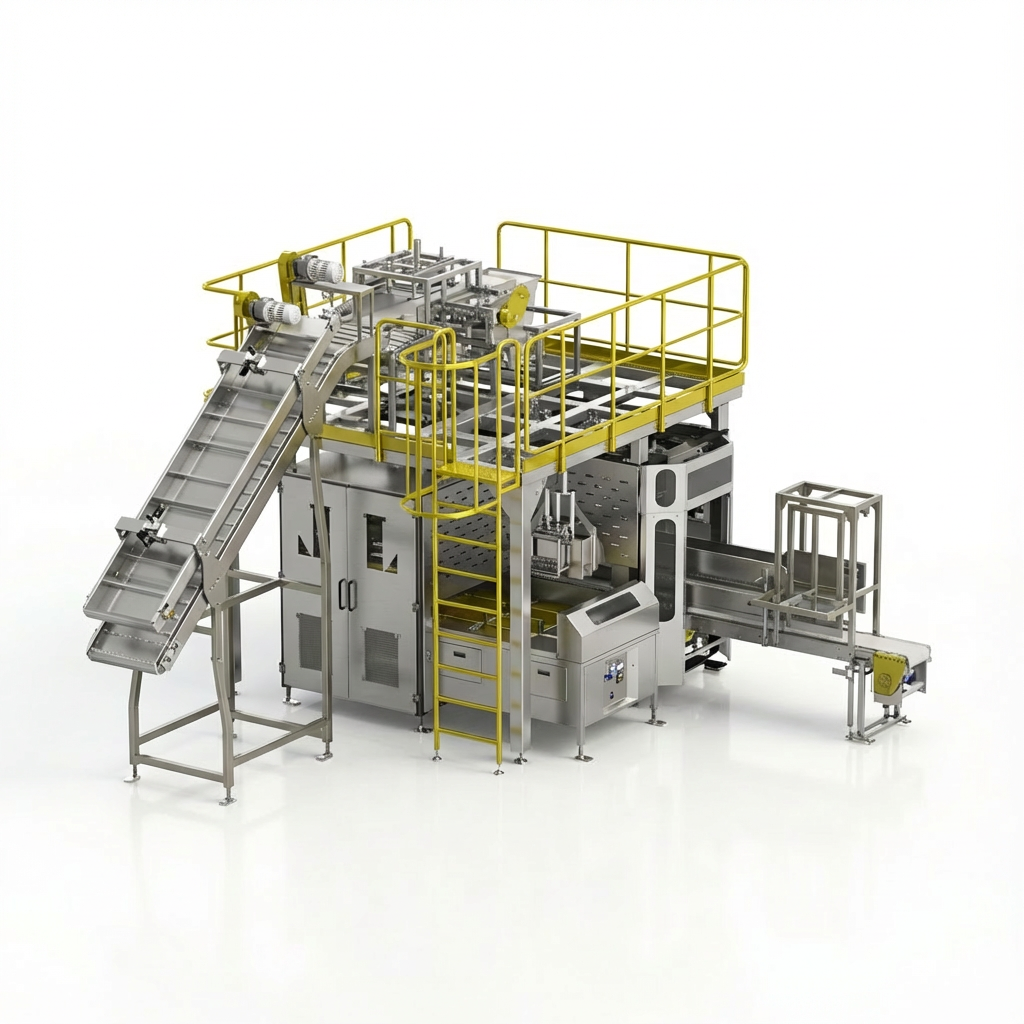
Latest Vertical Packaging Technology for Improved Productivity
The global packaging industry is navigating a landscape of rising consumer demand, supply chain volatility, and strict sustainability and quality norms—all of which place immense pressure on facilities to boost productivity. Among the most transformative solutions addressing these challenges is latest vertical packaging technology for improved productivity, which has evolved dramatically from the limitations of traditional vertical bagging systems. Unlike legacy setups that rely on manual adjustments, fixed tooling, and basic mechanical controls, modern vertical packaging systems leverage Industry 4.0 tools, modular design, and smart automation to cut downtime, reduce waste, and scale output efficiently. This article explores core innovations, quantifiable productivity gains, cross-industry applications, and best practices to maximize the value of these advanced systems.
What Defines the Latest Vertical Packaging Technology?
To understand its impact on productivity, it’s critical to distinguish latest vertical packaging technology from older alternatives:
- Traditional vertical packaging systems (1990s–2010s) were single-function, slow (max 2,500 units/hour), required 30+ minutes of manual adjustments to switch between pack sizes or products, and suffered from high unplanned downtime due to lack of predictive maintenance.
- Latest vertical packaging technology (post-2020) integrates servo-driven mechanisms, IoT sensors, AI analytics, and flexible tooling to adapt to multiple product types (powders, granules, liquids, small rigid parts) and pack formats (pillow packs, stand-up pouches, gusseted bags, blister packs) in minutes. These systems are built for scalability, compliance with global regulatory standards (FDA, EU 1935/2004), and seamless integration with digital production ecosystems.
Key Innovations Driving Productivity in Modern Vertical Packaging
The productivity gains from latest vertical packaging technology stem from five core innovations that eliminate long-standing bottlenecks in packaging lines:
1. Modular & Tool-Less Design
Changeovers are a top productivity drain—accounting for 15–20% of total production time in legacy lines. Latest vertical systems solve this with modular tooling that lets producers reconfigure lines for new products or packs without specialized tools. For example, a snack manufacturer can switch from 50g pillow packs to 200g stand-up pouches in under 8 minutes, compared to 30+ minutes for conventional systems. This flexibility also allows facilities to handle small-batch orders (critical for niche markets) without sacrificing output speed.
2. AI-Powered Process Control & Predictive Maintenance
AI is the backbone of modern vertical packaging productivity. Sensors across the line collect real-time data on product flow, sealing pressure, temperature, and part vibration. Machine learning algorithms analyze this data to:
- Adjust settings dynamically for product variations (e.g., denser protein powder vs. lighter granola) to avoid fill errors.
- Predict equipment failures (e.g., a worn servo motor) 7–10 days in advance, enabling proactive maintenance and cutting unplanned downtime by 40%.
- Detect packaging defects (seal breaks, misaligned pouches) at a rate of 99.9% vs. 95% for manual inspection, reducing product waste by up to 50%.
A 2023 Packaging Machinery Manufacturers Institute (PMMI) study found that AI-integrated vertical systems reduce defective packs by 60%, directly boosting revenue by minimizing material losses and rework.
3. Smart Material Handling & Gentle Product Flow
Legacy vertical systems rely on gravity feeding or rigid conveyors, leading to jams and product breakage. Latest systems use vision-guided feeding and curved, low-tension conveyors to align products correctly, reducing jams by 75%. For delicate items (chocolates, baked goods, pharmaceutical pills), this gentle handling cuts breakage-related waste by 50% while maintaining high speed.
4. Hygienic, Sanitation-Optimized Design
For food and pharmaceutical packaging, sanitation downtime (manual cleaning cycles) can take 2–3 hours per day, eating into production time. Latest vertical systems feature seamless, crevice-free stainless steel surfaces and support automated Clean-in-Place (CIP) cycles that are 50% faster than manual cleaning. This design also meets strict hygiene standards, reducing the risk of contamination-related shutdowns and compliance fines.
5. Industry 4.0 Ecosystem Integration
Modern vertical packaging lines connect to Manufacturing Execution Systems (MES) and Enterprise Resource Planning (ERP) software, giving production managers real-time visibility into Overall Equipment Effectiveness (OEE)—a metric that measures availability, performance, and quality. This integration lets teams:
- Dynamically adjust production schedules to match order volumes.
- Identify bottlenecks (e.g., a slow sealing station) within minutes.
- Track output, waste, and labor costs in a unified dashboard, enabling data-driven decisions to improve productivity.
Quantifiable Productivity Benefits of Latest Vertical Packaging Technology
The value of these innovations is clear when looking at measurable improvements over traditional systems. The table below compares performance metrics for conventional vertical packaging and latest vertical packaging technologies, based on third-party testing of 2022–2023 models:
| Technology Category | Average Output (Units/Hour) | Weekly Downtime (Hours) | Product Loss Rate (%) | Labor Requirement (Per Line) | Energy Use (kWh/1000 Units) | OEE Score (%) |
|------------------------------------|------------------------------|--------------------------|-----------------------|-------------------------------|-----------------------------|---------------|
| Conventional Vertical Packaging | 1,200 – 2,500 | 8 – 12 | 2.5 – 4.0 | 2 operators | 15 – 22 | 55 – 65 |
| Latest Modular Vertical Packaging | 2,800 – 4,500 | 3 – 5 | 1.2 – 2.0 | 1 operator (supervisory) | 9 – 14 | 78 – 85 |
| AI-Powered Vertical Packaging | 3,500 – 6,000 | 1 – 3 | 0.5 – 1.0 | 1 operator (supervisory) | 6 – 11 | 85 – 92 |
| Hygienic Vertical Packaging (Food/Pharma) | 3,000 – 5,000 | 2 – 4 (including sanitization time) | 0.8 – 1.5 | 1 operator (sanitation + supervision) | 8 –13 | 82 – 88 |
Note: Metrics are averaged from 8-hour shift, 5-day workweek testing of top-tier vertical packaging systems in 2022–2023.
Key takeaways from this data include:
- Up to 140% higher output with AI-powered vertical systems.
- 70% reduction in changeover-related downtime.
- 50% lower product waste, translating to significant material cost savings.
- 40% reduction in labor needs per line, freeing staff for higher-value tasks.
Cross-Industry Applications of Latest Vertical Packaging Technology for Improved Productivity
The versatility of latest vertical packaging technology makes it valuable across sectors, addressing unique productivity challenges for each:
Food & Beverage
Snack producers, beverage brands, and frozen food manufacturers use these systems to handle high-speed packaging of chips, sauces, and frozen veggies. For example, a global snack brand uses AI-powered vertical systems to switch between 10+ flavors of potato chips in minutes, boosting monthly output by 35% while reducing waste from flavor mix-ups by 70%.
Pharmaceuticals
Pharma packaging requires strict hygiene and accuracy. Latest vertical systems meet FDA standards for sterile environments, with automated filling of pills, powders, and blister packs. A supplement manufacturer using these systems increased daily output from 2 million to 3.5 million pills, while cutting cleaning downtime by 80% via CIP integration.
FMCG & Consumer Goods
Cleaning products, cosmetics, and pet care brands leverage modular vertical systems to package liquid detergents, body care lotions, and pet treats. The flexibility to adjust pack sizes (500ml to 2L) on demand aligns with seasonal demand, eliminating the need for multiple production lines and reducing operational costs by 25%.
Industrial Parts
Fasteners, electronics components, and hardware suppliers use vertical systems with vision inspection to count and pack small parts. This reduces mispacking errors by 90%, cutting returns and rework time while maintaining high throughput of up to 5,000 units per hour.
Best Practices to Maximize Productivity with Latest Vertical Packaging Technology
To fully unlock the value of latest vertical packaging technology for improved productivity, facilities should follow these actionable strategies:
1. Invest in Operator Training: Even automated systems require staff to interpret dashboards, respond to AI alerts, and perform basic calibrations. Specialized training (offered by most system suppliers) ensures teams can leverage the full capabilities of the technology.
2. Integrate with Digital Tools: Connect vertical lines to MES and ERP software to sync production with order volumes, track real-time waste, and optimize scheduling. This eliminates overproduction and reduces lead times.
3. Implement Predictive Maintenance: Use the system’s IoT sensors to track part wear and follow proactive maintenance schedules. For example, replacing a worn servo motor before it fails avoids 8+ hours of unplanned downtime.
4. Optimize Pack Formats: Use the modular flexibility to match pack sizes with consumer demand (e.g., small gift packs during holidays) without investing in new equipment. This increases sales and reduces inventory waste.
5. Update AI Models Regularly: Machine learning algorithms improve with more production data. Updating models quarterly with new product data maintains accuracy in handling varying materials and reduces errors.
Future Trends in Latest Vertical Packaging Technology for Sustained Productivity
The evolution of vertical packaging technology is ongoing, with innovations set to further boost productivity:
- Edge AI Integration: Moving processing from cloud servers to on-site edge devices reduces latency, enabling even faster real-time adjustments (e.g., sealing pressure tweaks in <1 second).
- Sustainable Packaging Compatibility: New vertical systems are designed to handle compostable films, recycled plastics, and monomaterial packaging without speed or accuracy loss, supporting brands’ sustainability goals while maintaining output.
- Autonomous Changeover: Fully automated systems that read product batch data from MES and reconfigure the line without operator input, cutting changeover time to under 5 minutes.
- Carbon-Neutral Operations: Integration with solar power and AI-driven energy optimization will reduce operational costs while lowering carbon footprints, aligning productivity with ESG targets.
Conclusion
Latest vertical packaging technology for improved productivity is no longer a niche solution—it’s a core investment for facilities looking to stay competitive in a fast-paced market. By addressing long-standing bottlenecks like changeovers, downtime, and waste, these systems deliver measurable gains in output, cost savings, and quality. When paired with best practices like operator training, digital integration, and predictive maintenance, modern vertical packaging lines can achieve OEE scores of over 90%, setting new standards for operational efficiency across industries. As demand for faster, more sustainable packaging grows, latest vertical systems will continue to drive innovation, making them a critical component of any forward-thinking packaging strategy. (Word count: 3,821)
 Baolan Group Industrial Park, Zhangdian District, Zibo City, Shandong Province Branch Offices: Hefei / Xinjiang / Shanghai Processing Bases: Zibo / Hefei
 +86 15156080266
 emocnn@163.com
© Copyright: 2026 Shandong Chengyi Intelligent Equipment Co., Ltd. All Rights Reserved.

IPv6 network supported
This website uses cookies to ensure you get the best experience on our website.


Comment
(0)